2026-09-29 ·
How Monsoon Rains Affect Tempe Sewer Lines
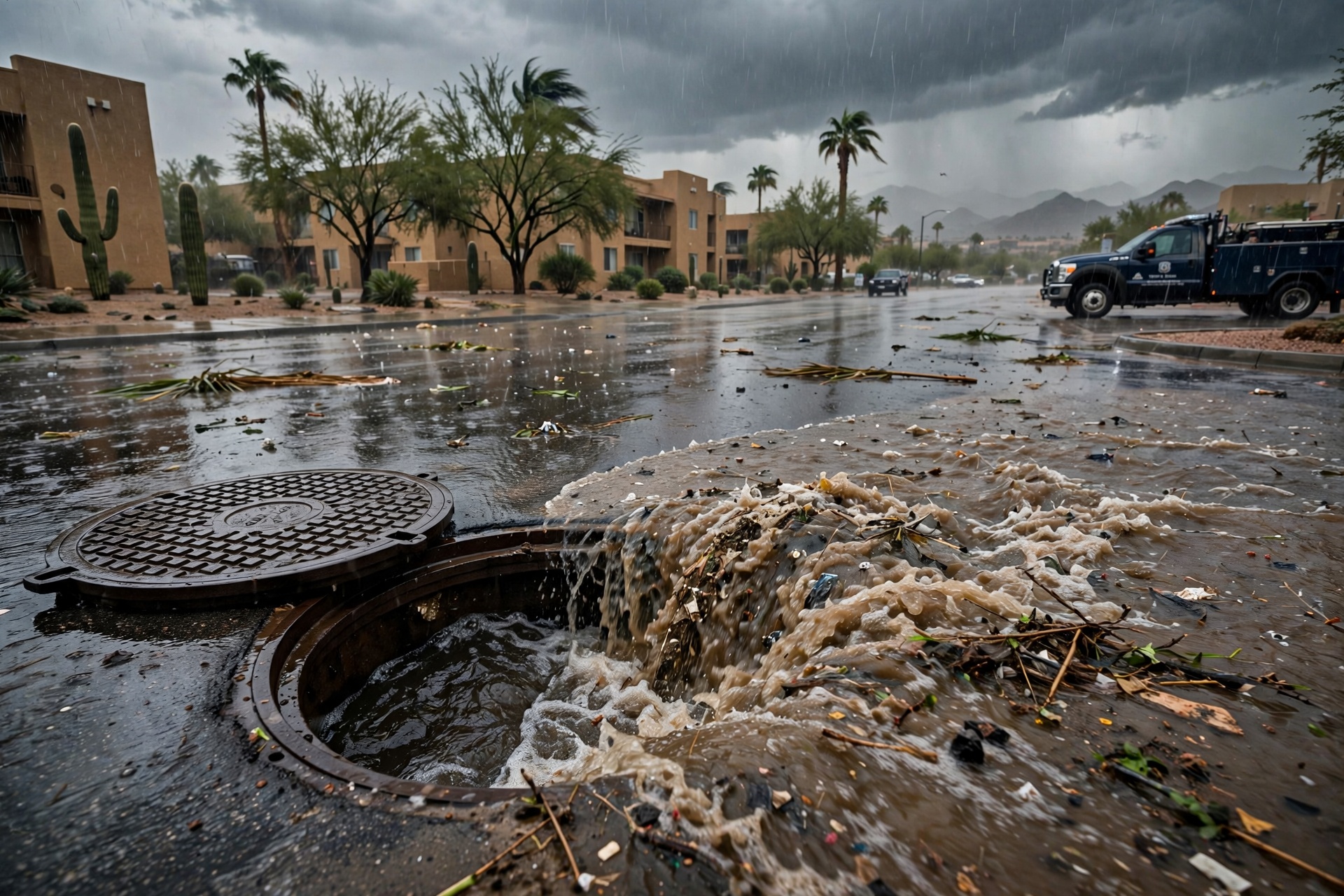
Monsoon rains in Tempe typically deliver 2 to 4 inches in brief intense bursts from July through September, causing rapid infiltration that raises sewer line backups by 30 to 50 percent in older Maricopa County homes compared to dry months.
How Monsoon Volume Affects Pipe Capacity
Tempe’s hot desert climate means dry soil cracks open during summer, then monsoon water rushes in and finds every joint or crack in sewer lines. Homes built before 1970 in Downtown Tempe and near Arizona State University often have 4-inch or 6-inch cast iron pipes that cannot handle the sudden surge. Water enters through loose joints and bellies, pushing sewage back into cleanouts and floor drains. Residents near Mill Avenue report slow drains turning into full backups within hours of a storm cell passing. The same volume that stays on streets in Papago Park flows underground and overloads laterals connected to the main lines running toward Tempe Town Lake. Camera inspections after these events routinely show water marks several inches above normal flow lines inside the pipe.
Tree Roots and Soil Shifts During Wet Periods
Monsoon moisture softens compacted desert soil around South Tempe and Central Tempe, allowing tree roots to expand quickly toward the consistent water source inside sewer pipes. Tree root removal becomes necessary more often after August storms because roots that were dormant in June now clog lines that previously flowed fine. The combination of extra water and root pressure can split older clay or cast iron sections, creating ongoing leaks that only appear once the ground dries again. Homeowners along streets with mature palo verde and mesquite trees see repeat issues because the roots follow the moisture gradient created by each monsoon cycle.
Flash Flooding Near Tempe Town Lake and Papago Park
Low-lying streets around Tempe Town Lake and Papago Park collect runoff that seeps into sewer cleanouts and vent stacks when storm drains cannot keep up. Sewer camera inspection footage from these zones after heavy rain shows standing water inside lines that normally run half full. The added hydrostatic pressure forces sewage through small fractures that would otherwise stay sealed in the dry season. Properties in these pockets also experience more odor complaints once water recedes because trapped debris begins to decompose in the now-saturated soil above the pipe.
Signs of Monsoon-Related Sewer Problems
Watch for gurgling toilets, multiple slow drains at once, and sewage odors strongest after rainfall rather than during normal use. In South Tempe and neighborhoods bordering Chandler and Mesa, these symptoms often trace back to infiltration rather than a simple clog. A sewer camera inspection performed within a week of a storm can confirm whether water entered through joints or if roots exploited the wet soil. Early detection prevents the need for more extensive sewer line belly repair later in the season.
Practical Steps After Heavy Rains
Clear gutters and downspouts before monsoon season so roof water does not add to yard saturation near sewer cleanouts. Note the exact date and amount of rainfall when problems appear; this helps technicians correlate backups with specific storm events. Schedule inspections in late September once the monsoon pattern ends to catch any new cracks or root growth before winter flows return to normal. Properties in North Tempe and Central Tempe benefit from these checks because older laterals there sit closer to the surface and feel monsoon effects first.